Breathtaking views apart, do consider the security situation, old laws, connectivity and appetite for real estate before taking the plunge.
The Centre has put Jammu and
Kashmir on the real estate map of India by allowing any Indian citizen to buy
land in the union territory where non-residents could not buy immovable
property until a year ago.
On October 27, the government
notified the Union Territory of Jammu and Kashmir Reorganisation
(Adaptation of Central Laws) Third Order, 2020, omitting the phrase “permanent
resident of the state” from Section 17 of the Jammu and Kashmir Development
Act. This section deals with the disposal of land.
The move comes more than a year after the Centre abrogated
Article 370 that gave special status to Jammu and Kashmir and bifurcated the
border state into union territories of Jammu and Kashmir and Ladakh.
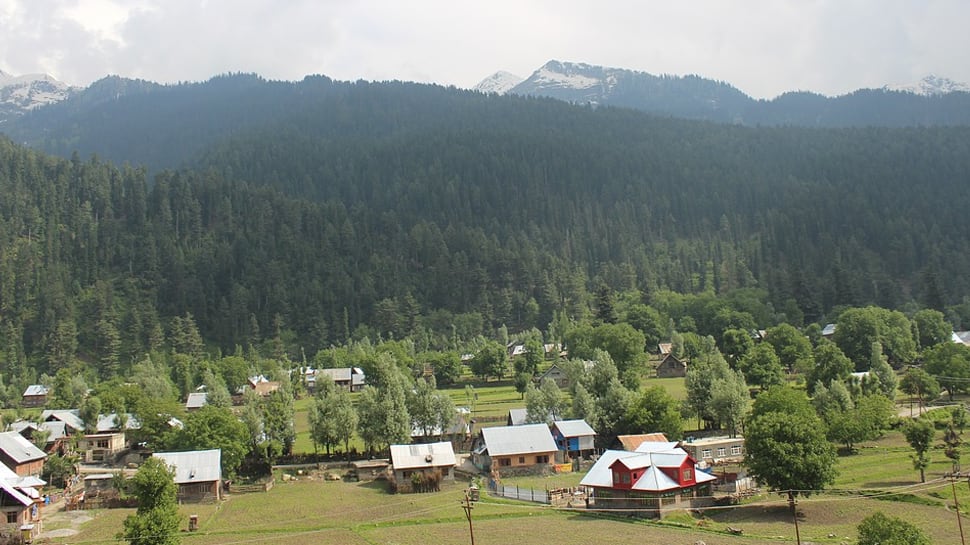
The changes in land law, which are only for Jammu and Kashmir,
are significant as an Indian citizen can now buy urban, or non-agricultural
land and property in the UT.
The laws also talk
about facilitating the sale of farmlands but for that government’s permission
will be required like in several other states. The laws, however, do not impose
limits on the land that can be used for housing or commercial activity. These curbs
are there in states such as Himachal Pradesh and Uttarakhand, where “outsiders”
can’t buy agricultural land.
What does it mean for the realty sector?
The real estate sector has welcomed the move, saying developers
may launch projects in the union territory, with the picturesque Kashmir Valley
emerging as a favoured second-home destination.
“This is a historic move which
will further open up investment opportunities in the UT and see a new area of
development for the realty sector in the area,” said Jaxay Shah, chairman,
Credai.
The decision would allow the a
real estate regulation and development authority to come up, which will
facilitate sales of plots for commercial and residential purposes in a
transparent manner. “The augmented legal framework will bring in transparency
and boost investments in the sector,” Shah said.
The Confederation of Real Estate
Developers Association of India (CREDAI) is one of the biggest autonomous body
of builders and developers in the country.
People who dreamt of owning a
house in Kashmir would invest in affordable as well as luxury segments. It
would further boost tourism that remains a significant pillar of the economy,
Shah said.
But is it as easy as it sounds?
Kashmir is battling a decades-old insurgency and Pakistan’s aggressive tactics
keep the Line of Control as well as the international border volatile.
Location
Kashmir’s is a place with a view—snow-capped peaks, mighty
Chinars, saffron fields and apple orchards to name a few. “I remember the
breathtaking and mesmerising view of the milky way and snowfall in full moon
nights. I would like to buy property there,” said former army officer Major
Ashish Chadha, who now runs Chadha Investment Consultants, a financial advisory
firm.
There are, however, many other factors one needs to consider
before buying property, be it for use or investment purposes.
“Just the scenic beauty is not enough reason for someone to
migrate from another part of the country to J&K and settle there,” said
Sanjeev Govila, CEO, Hum Fauji Initiative, which specialises in planning
finances for defence personnel.
Those residents who moved out after the insurgency broke out in
the 1980s or for other reasons may think of returning to what is now a Union
Territory because of an emotional and cultural connect. But for others, it
would not be like migrating between other states, said Govila.
Not everyone is would want to make a permanent shift. Many would
want holiday homes or may buy a property to settle in the state after
retirement.
“One may consider buying a property in Jammu and some parts of
Kashmir as holiday or retirement homes. Jammu is well connected with other
parts of the country through rail, road and air, and has well-developed health
and other infrastructure as well as established economic activities,” said
Govila.
Most parts of Kashmir are connected by road but rail and air
connectivity are limited.
Security,
and COVID pain
For those considering a second home, security and safety would
be a big concern and so would be the legal challenges. Developers, too, will
not make a beeline to launch projects in the area immediately.
“They are undergoing pain at their existing locations on account
of the pandemic and they will wait for the situation to first stabilise in
their existing operations before they start looking at an unchartered territory
such as J and K. They would also want to be assured of safety and security,”
said Siddhart Goel, Senior Director, Research at Colliers International India.
Worth an
investment?
According to Rahul Arora of Trilegal, it is too early to say how
the new legal framework will pan out.
Repealing 12 state laws and amending an equal number, the new
legal framework is aimed at a major reorganisation in the state, he told
Moneycontrol. Such decisions take time to evolve.
Thus, to facilitate implementation, the framework may be
followed up by further orders/notifications or further clarifications, he said.
Given the legal overhaul with the focus on attracting
investments but without compromising the UT’s economy, an investor will have to
consider the "development zones" which are to be notified by the
government for investments and use for specified purposes, Arora said.
Those buying land will have to check if there are any
outstanding claims or litigation, he said.
The new rules bode well for the hospitality, tourism retail,
entertainment, healthcare and education sectors.
The Maharashtra government had last year said it was planning to
buy two land parcels, in Jammu and Kashmir and Ladakh, for resorts. The
Karnataka government, too, proposed a luxury hotel in the Valley.
The real estate market has remained subdued across India for the
last few years. Except a few pockets, price appreciation is negligible, and in
some pockets, property prices have even slipped.
As the Centre works on a new industrial policy and rolls out
development schemes for J&K, some experts think property prices will pick
up after the realty market opens up.
“Jammu is expected to see some price appreciation as the
government has announced many schemes and plans for this reason,” Govila said.
Therefore, one may think of investing in Jammu and nearby areas,
but one should avoid parts of south Kashmir where insurgency continues, he
added. South Kashmir is considered the hotbed of insurgency.
It makes sense to wait and watch. See how it plays out for those
who do go there. But if you wish to buy a property right away, it makes sense
to stick to the urban areas of Jammu for now.
Will
prices appreciate?
Property is most parts of Jammu and Kashmir is fairly affordable
and ranges between Rs 2,200 to Rs 4,000 per sq ft in Srinagar, Rs 2,400-4,000
in Jammu and Rs 2,500- 3,200 per sq ft in Baramulla.
It is too early to gauge the impact of the move on Kashmir's
real estate market. As of now, it is still a highly sensitive region and
security concerns may keep property buyers at bay.
Price appreciation will happen only if demand goes up and that
will be possible if there is the confidence that both people and investments
are safe, said Goel of Colliers.
Punjab and Assam, the other two states to battle insurgency, saw
prices appreciate once the trouble subsided. Will Kashmir see a similar trend?
“There is a lot of difference between Kashmir and Punjab. For
instance, it is difficult to set up industries in Kashmir, whereas Punjab was
always rich in agriculture and other sectors. So Kashmir may not see similar
appreciation in property prices like Punjab witnessed soon after the end of the
insurgency,” said Govila.
Chadha said one could buy property in J&K now but would have
to wait for at least 10-15 years to see any significant value growth.
If your risk appetite is high and you can afford to wait for
many years for your property prices to increase, then Kashmir could be an
option. Jammu is a safer bet but due diligence is a must for both parts.
Should
you invest now?
It is too early to predict how demand for real estate will pan
out in a highly sensitive region.
"Even if some are keen to buy property, they will closely
watch the political scene unfold before taking the plunge,” said Prashant
Thakur, director and head – Research, ANAROCK Property Consultants.
“Unless
safety is given paramount importance, it is difficult for real estate activity
to pick momentum here,” he said.
Investors should be extremely cautious before investing in these
border areas because these are problematic geographies.
Besides, these parts of the country never had a mature real
estate market, constrained by artificial barriers to buying and selling a
property. This may take a while to change.
(Ashwini Kumar Sharma is a freelancer.)
Comments
Post a Comment